Raptus Aviario


Down the Goose Hole


(DEADLINE: 30/06/2025)

My page is dirty, now what?


Il treno rosso arriva in stazione, rosso il vapore, rosso lo stridere dei freni e rossa la gente che ne entrava o ne usciva.
Capotreno: “Salite, è arrivato il treno rosso, un treno del passato nel futuro, un passo vi separa dalla vostra vita.”
Persona gialla: “Non capisco, dove va questo treno?”
Capotreno: “Guarda, non è importante dove va il treno, è importante dove vai tu. Lo sapevi che questo treno è più rosso all’interno che all’esterno?”
Il treno rosso parte lasciando le persone di altri colori in stazione. Tra questi colori il giallo.
Io: “Tu invece, persona gialla, che treno aspetti?”
Persona gialla: “Io aspetto il treno giallo, un treno del passato nel futuro, un passo per iniziare a vivere.”
Io: “E dove va questo treno?”
Persona gialla: “Non è importante dove va il treno, quello che importa è dove vai tu. Lo sapevi che questo treno è più giallo all’interno che all’esterno?”
Io: “Allora è come il treno rosso, ma giallo. Non pensi che tu e tutte le persone colorate vi ritroverete per treni diversi alla stessa identica destinazione?”
Persona gialla: “Impossibile, tu che pensi di andare altrove invece che treno aspetti?”
Io: “In realtà non aspetto nessun treno, e non penso di andare altrove, ero qui seduto a guardare gli uccelli.”
Persona gialla: “E dove ti porta guardare gli uccelli?”
Io: “Guarda, non è importante dove ti porta, è importante…”
Persona gialla: “Allora vedi, il tuo treno è come un treno, soltanto non lo è.”
Io: “Ci rivedremo tutti alla fine del viaggio.”
Persona gialla: “Ora capisci?”
Io: “No.”

The red train arrives at the station, red the steam, red the screeching of the brakes, and red the people entering or exiting.
Conductor: “Board now, the red train has arrived, a train from the past into the future, one step away from your life.”
Yellow Person: “I don’t understand, where does this train go?”
Conductor: “Look, it’s not important where the train goes, what matters is where you go. Did you know this train is redder inside than out?”
The red train departs, leaving the people of other colors on the platform. Among them, yellow.
Me: “And you, yellow person, which train are you waiting for?”
Yellow Person: “I’m waiting for the yellow train, a train from the past into the future, a step to start living.”
Me: “And where does this train go?”
Yellow Person: “It’s not important where the train goes,what matters is where you go. Did you know it’s yellower inside than out?”
Me: “So it’s like the red train, but yellow. Don’t you think all you colored people will end up on different trains heading to the exact same destination?”
Yellow Person: “Impossible. You, who think you’re going elsewhere, what train are you waiting for?”
Me: “Actually, I’m not waiting for any train, nor do I think I’m going elsewhere. I was just sitting here, watching the birds.”
Yellow Person: “And where does watching the birds take you?”
Me: “Look, it’s not important where it takes you, it’s important…”
Yellow Person: “So you see? Your train is like a train, except it isn’t.”
Me: “We’ll all meet again at the end of the journey.”
Yellow Person: “Now do you understand?”
Me: “No.”
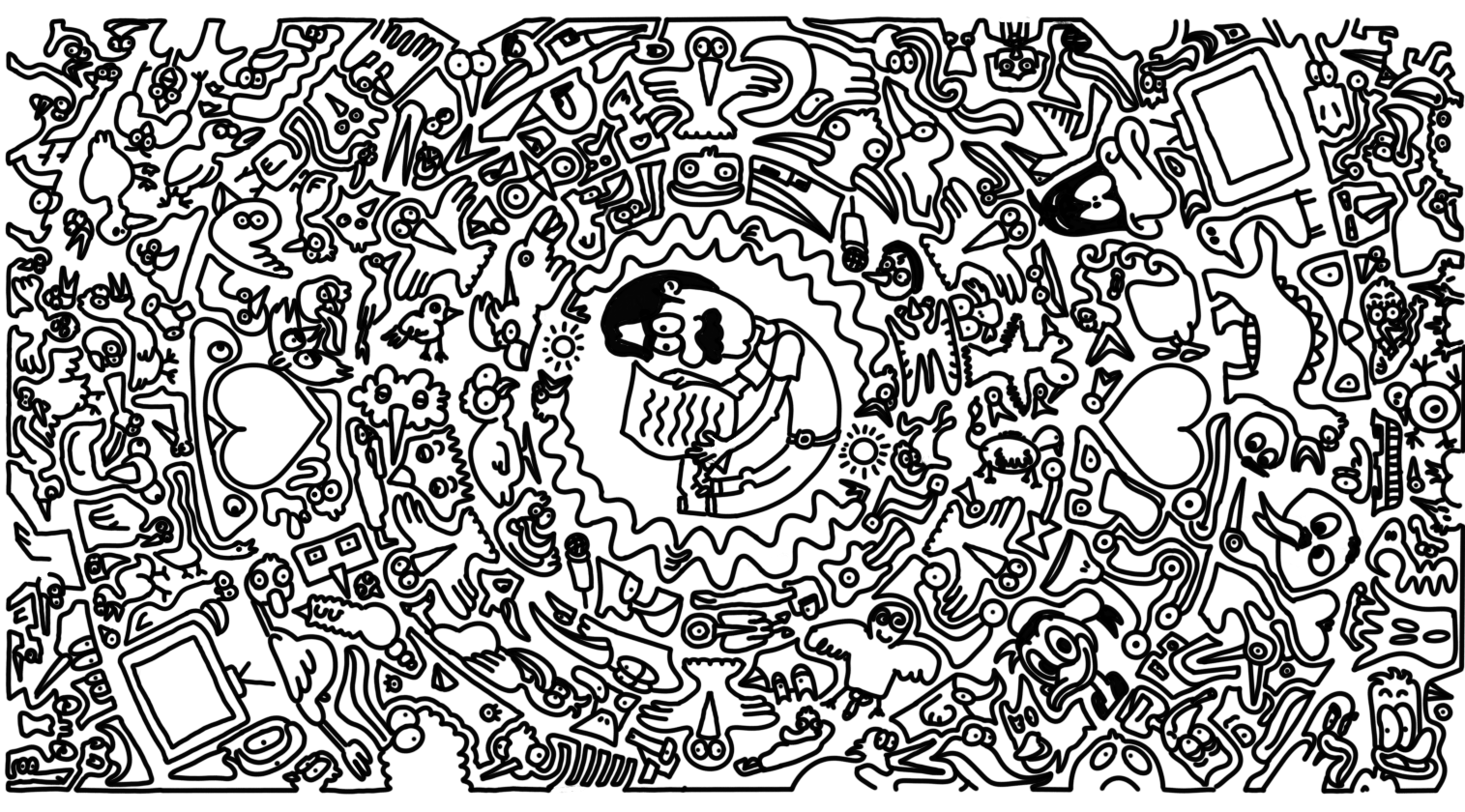
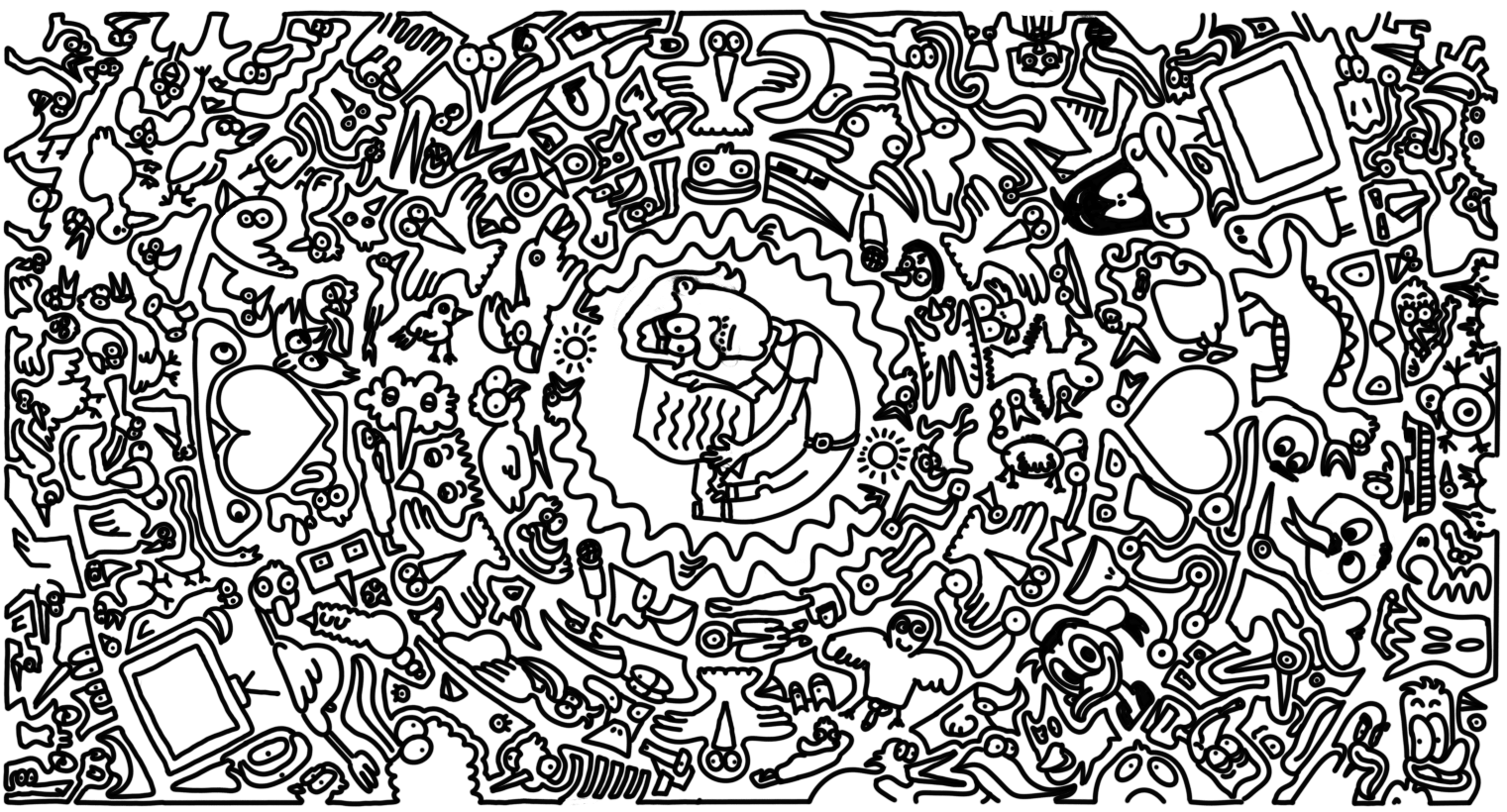
MiniocheITA

MiniocheENG

Mon regard se perd. Le vert des arbres. Les vélos qui passent comme les aiguilles de l'horloge. La vue des capuches des cyclistes entraine une prise de conscience; je dézoome. En effet, des larmes coulent aussi sur la fenêtre. Pluie et mélancolie... y a pas de quoi casser trois pattes à un canard. Bizarre expression, qui donnerait l'information juteuse à des extraterrestres que peu de canards ont trois pattes. Il faudrait bien que je sorte de cette mélancolie. Je zoome de nouveau. Retour au monde. Très, très lent. Je zoome sur un homme d'une cinquantaine d'années qui marche d'un pas décidé. Son horloge est plus rapide. Il donne un rythme different au monde de celui des vélos qui passent. Se rend-il compte que son aura, sa carrure, ses vêtements, son pas, son regard, son souffle écrivent les notes de la bande son du film de sa vie? Enfin seulement celui dont je suis réalisatrice... Et puis il ne m'intéresse pas le banquier, je préfère oublier son existence le plus vite possible. Elle justifie l'inexistence de ce lieu. Je m'invente un monsieur. Il est grand, les yeux rouges, dégingandé et obèse. Toc! Ça fera travailler l'imagination. Très confus, compréhensible vu son niveau de description, mon grand gros monsieur s'assied hébété sur un banc et regarde le canal. "Oh.. des bébés oies! " ..."s'écrie le monsieur " … dis-je en me grattant la gorge. Il était un sculpteur mais avant tout un marginal. Ayant accepté dès le plus jeune âge sa situation, il n'en avait toujours fait qu'à sa tête. Il était si habitué à attirer curiosités voire indignations que lorsqu'il faisait ses bizarreries habituelles, il ne se retournait même plus pour regarder les bébés oies, euh…, les badauds incrédules qui s'arrêtaient pour observer le spectacle. Il vivait de rien, certains jours faisait semblant d'être un bébé oie, euh…, ogre pour racketter un bébé oie, euh…, un bébé oie. Ces derniers bébés oies, il s'était trouvé une bébé oie pour la sculpture. Vous ne devinerez bébé oie ce sur bébé qu-oie il travaillait en ce bébé oie: hm hm .. un bébé oie. Couac.

The green of the trees. The bicycles passing like clock hands. The sight of the cyclists’ hoods triggers a realization; I zoom out. Indeed, tears are also streaming down the window. Rain and melancholy... “y a pas de quoi casser trois pattes à un canard “ (““nothing like a three-legged duck””). Weird expression, really, one that would give aliens the juicy tidbit that few ducks have three legs. I really ought to snap out of this gloom. I zoom back in. Return to the world. Very, very slow. I focus on a man in his fifties walking with determined steps. His internal clock runs faster. He sets a different rhythm for the world than the passing bicycles. Does he realize his aura, his stature, his clothes, his stride, his gaze, his breath are all composing the soundtrack of his life’s movie? Or rather, just the one I’m directing… Anyway, the banker doesn’t interest me. I’d rather forget he exists as quickly as possible. His presence justifies the inexistence of this place. So I invent a man of my own. He’s tall, red-eyed, lanky, and obese. Bam! That’ll get the imagination going. Hopelessly confused, understandable, given how poorly I’ve described him. My big hulking man plops down dazed on a bench and stares at the canal. “Oh.. Baby geese!” ...“exclaims the man” ...I say, clearing my throat. He was a sculptor, but above all, an eccentric. Having accepted his oddity from a young age, he’d always done as he pleased. So accustomed to drawing curiosity, even outrage, he no longer bothered to turn his head when performing his usual antics—not even to glance at the baby geese, er... the baffled onlookers who stopped to watch the spectacle. He lived on next to nothing. Some days, he pretended to be a baby goose, er... an ogre, to shake down a baby goose, er... a baby goose. Eventually, he found his baby goose, for sculpting, that is. You’ll never baby guess what he was baby gworking on at that baby moment: Hm hm... a baby goose. Quack.


Linea Morta


Il Viaggiatore si era svegliato presto quella mattina, poco dopo il sorgere di un pallido sole primaverile. Aveva lasciato un legnetto intagliato al compagno di quella notte, una piccola volpe che si era addormentata vicino al calore del suo fuoco. Poi aveva iniziato a camminare, un passo dopo l’altro, come aveva sempre fatto da quando aveva memoria e come sempre continuerà a fare. Dopo qualche ora di cammino, senza particolare direzione se non il profilo vago e distante delle Montagne, gli uccelli iniziarono a moltiplicarsi.
All’inizio non ci fece caso. Un passero che lo precedeva lungo la strada, svolazzando di ramo in ramo, quasi a indicargli la direzione. Un piccione sopra un cartello scolorito, che lo osservava mentre passava, ruotando la testa per seguire il suo continuo incalzare. Una piccola civetta, nascosta in uno dei pochi alberi sul limitare del selciato, intenta a riposarsi dopo una notte di caccia.
Poi, qualcosa cambiò.
C’erano troppi uccelli, tutti in posizioni troppo precise. Sette tortore disposte in semicerchio attorno a una pozza d'acqua, tutte intente a sorseggiare l’acqua fredda. Tre merli perfettamente allineati sopra una panchina, come picche sopra ad un cancello. Un airone — un airone! — in piedi sul tetto di un'automobile abbandonata, un’antenna sbagliata.
Il Viaggiatore arrivò al Villaggio Minuscolo, due strade in croce, case basse e tende tirate. Nessuno in vista. Solo volatili: due picchi sulla buca delle lettere, ormai simile a una grattugia, una gazza che rincorreva uno scoiattolo, e una serie di cinciallegre appollaiate su tutti i davanzali, che sbattevano le ali senza volare.
Su un muretto, qualcuno aveva scritto con il gesso: "Oggi non ci sono uccelli."
Il Viaggiatore si guardò intorno e si accorse che tutti gli uccelli lo stavano fissando. Non sentiva paura: aveva solo la sensazione di essere stato invitato a qualcosa di cui ignorava il significato.
Passò accanto a un campo pieno di spaventapasseri, tutti con maschere da carnevale e cravatte storte. Ogni spaventapasseri aveva un pettirosso sulla spalla. Lui si fermò. Guardò il cielo. Una folata di vento lo investì, portandogli l’odore del mangime e un pugno di piume. Un invito a proseguire.
“Va bene,” mormorò. “Continuo.”
E continuò.


- Diario del Viaggiatore -

The Traveler had awakened early that morning, shortly after the rise of a pale spring sun. He had left a little carved wood with that night's companion, a small fox that had fallen asleep near the warmth of his fire. Then he had started walking, one step after another, as he had always done since he could remember and as he would always continue to do. After a few hours of walking, with no particular direction except the vague and distant outline of the Mountains, the birds began to multiply.
At first he took no notice. A sparrow ahead of him along the road, fluttering from branch to branch, almost pointing him in the direction. A pigeon on top of a faded sign, watching him as he passed, turning its head to follow his constant chasing. A little owl, hiding in one of the few trees on the edge of the pavement, intent on resting after a night of hunting.
Then, something changed.
There were too many birds, all in too precise positions. Seven turtle doves arranged in a semicircle around a waterhole, all intent on sipping the cold water. Three blackbirds perfectly lined up above a bench, like pikes above a gate. A heron-a heron! - standing on the roof of an abandoned car, a wrong aerial.
The Traveler arrived at the Tiny Village, two cross streets, low houses and pulled tents. No one in sight. Only birds: two woodpeckers on the letterbox, now resembling a grater, a magpie chasing a squirrel, and a number of titmice perched on all the windowsills, flapping their wings without flying.
On a small wall, someone had written in chalk, "There are no birds today."
The Traveler looked around and noticed that all the birds were staring at him. He did not feel fear: he just had the feeling that he had been invited to something whose meaning he ignored.
He passed by a field full of scarecrows, all wearing carnival masks and crooked ties. Each scarecrow had a robin on its shoulder. He stopped. He looked up at the sky. A gust of wind swept over him, bringing the smell of feed and a fistful of feathers. An invitation to go on.
“All right,” he murmured. “I'll continue.”
And he continued.


- Diario del Viaggiatore -


Numquamne tecum cogitas quid senex ille in scamno toto die, toto pomeridio, vel etiam tota hora dedicati temporis sui foris sedens cogitet? An exspectat momentum perfectum quo ventrem a flatu liberet? Patientiae artem sedulo exercens, dum ipse tempus manipulat, ut nemo praeter columbas urbanas suspicetur mutationem pressionis aeris vel odoris circumiecti. An homines praetereuntes captiose iudicat, an simpliciter observat, sine praeiudicio? An cogitat de proxima vice qua neptem suam visurus est, vel de proxima cena, vel de proximo momento quo amorem sentiet qualem aestate anni LXXIV senserat? Doleantne umeri eius aut dorsum? Solus est. Fortasse ita vult.
Amicus quem anno LXXXV conveniet mox praetervehetur—fortasse aliquid ridiculum dicet, fortasse non. Fortasse uxor eius modo mortua est, et hoc momento solacium petit. Fortasse non vult veterem comitem aliquid ridiculum dicere.
Aliquid ridiculum dicit.
Sentitne dolorem in pectore augescere? Emotionibusne provocatur? An pressione sanguinis alta? Iratusne est? Sentitne animositatem erga mundum qui eum praeterit?
Tussit.
Grex senum lente appropinquat. Omnes subrident, proxima dicta colligentes. Senex intellegit tempus scamni sui mox turbatum iri.
Iam turbatum.
Sentit impetum aggressionis corpus implere antequam teneat. Sanguis ad crura inundat dum corpus surgere cogit. Genua, deinde pedes. Dorsum inclinat et brachia lassa fiunt ad sustentandum quod reliquum est ut corpus a scamno immoto removeat. Unus e appropinquantibus aliquid dicit. Alius subridet et alius tussire pergit, paene violenter. Subita mutatio sonoris corporis eius percutit et ei permittit ut totus stet, nullo auxilio scamni quod eum tenuit. Recedit.
Ad cavernam anseris se confert.


- Pescador -

Do you ever wonder what the old man on the bench thinks about all day, all afternoon or even all of 1 hour of his dedicated outside bench time. Is he waiting for the perfect moment to relieve his colon of flatulence. Carefully practising the art of patience as he manipulates time itself so no one but the street pigeons have the faintest idea of a change in the surrounding air pressure or aroma. Is he judging the people passing by captiously or is he simply observing, without prejudice. Is he thinking about the next time he will see his grand daughter or his next meal or the next moment in which he will feel the kind of love he felt in the summer of 74’. Do his shoulders or back ache? He’s alone. Maybe that’s how he likes it.
His friend he met in 85’ will drive past soon - maybe he’ll say something funny, maybe he won’t. Maybe his wife just died and in this moment he is reaching for solace. Maybe he doesn’t want his old pal to say something funny.
He says something funny.
Does he feel the rise in pain in his chest? Is it emotionally triggered? Is it high blood pressure? Is he angry? Does he feel a sense of animosity towards the world that passes him by?
He coughs.
A cluster of old men slowly approach. They all wear a smirk, gathering their next remarks. The old man realises his bench time is soon to be disturbed.
Already disturbed.
He feels a sense of aggression fill his body before he has time to grab hold of it. Blood floods to his legs as he drives his body to rise. Knees, then feet. His back tilts and his arms grow weary to support what’s left to remove his body from the unwavering bench. One of the approaching men makes a remark. Another man chuckles and another proceeds to cough, almost violently. The sudden change in volume shocks his body and allows him to stand completely unreliant on the bench that held him. He retreats.
To the goose hole he goes.


- Pescador -


Un piccolo uomo, cammina, sulla superficie di un pianeta detto terra. Ogni passo del piccolo uomo è colorato dalle infinite forme e dagli infiniti colori degli abitanti del pianeta terra. Il pianeta terra è rosso, arido e non ha abitanti se non secca terra rossa, piccoli frammenti di roccia e qualche lastra di grigia pietra, sparsa qua e là. Qualche albero riesce a farsi strada nella arida terra e qualche nuvola, ogni tanto, versa qualche isolata bagnata goccia. Il piccolo uomo, cammina, sul detto pianeta. Ogni passo è roccia. Ogni passo è sasso. Ogni passo è morbido. Ogni passo è bagnato. Il piccolo uomo cammina, sulla superficie del pianeta terra. Sopra di lui, in vece, infinite rocce orbitano, immote, attorno al rosso pianeta. Il movimento delle rocce è di turbolenza privo, nel lontano ed immoto spazio. Si muovono, alcune allineate e unificate in masse più o meno estese, altre solitarie. Il movimento loro è naturale, e verso una necessaria, priva di domande, destinazione.
Il piccolo uomo, nella sua testa, raccoglie un fiore. Il piccolo uomo entra in contatto con il fiore. Il piccolo uomo ora conosce il linguaggio del fiore. Il piccolo uomo è all’interno del fiore, può muovervisi dentro. Ai confini dell’universo del piccolo uomo, ora, non vi si trova nulla, se non il fiore, che ora tutto colora e tutto ricopre. Il piccolo uomo mangia fiore annusa fiore e tocca fiore. Il piccolo uomo è molto concentrato sul fiore, possiamo dire.
Fintanto che il piccolo uomo rimarrà concentrato sul fiore che ha colto, col pensiero, le rocce della sua coscienza rimarranno allineate attorno questo fiore. In un secondo momento, il piccolo uomo, cammina. Cammina e a poco a poco orienta il suo sguardo su qualcosa di nuovo, si lascia il fiore alle spalle. Ecco adesso che le rocce della sua coscienza non orbitano più attorno al fiore e si muovono verso naturale e priva di domande destinazione. Ecco, adesso, come il piccolo uomo si muove, ogni giorno, in ogni momento, da un piccolo oggetto, per posarsi su un altro, nuovo, piccolo oggetto.


- il raccoglitore di parole -

A little man, walks, upon the surface of a planet called Terra. Each step he takes is painted with the endless shapes and colours of the planet’s many beings. Planet Terra is red, dry, and empty and its only inhabitants are red dust, bits of stone, and scattered slabs of gray rock. Now and then, a tree breaks through the dry ground and, sometimes, a lone cloud lets fall a quiet, lonely drop. The little man, walks, across this planet. Each step is stone. Each step is rock. Each step is soft. Each step is wet. The little man, walks. In the far distance, above his head, countless rocks float, still and silent in space, orbiting the red planet. They move with no rush and no noise - some gathered in drifting groups, others alone. Their movement is immaculate and their journey is questionless.
Inside his mind, the little man picks a flower. He touches it. Now he knows the language of the flower. Now he is inside the flower, he can move within the flower. The flower now touches the edges of his own world: within it, all is flower. It paints everything, covers everything. The little man smells “in a flower way”. Eats “in a flower way”. Feels “in a flower way”. He is very focused on the flower, we could say.
As long as the little man keeps his thoughts on the flower, the floating stones of his mind will keep orbiting around it. But then, he begins to walk again. Step by step, he lifts his gaze toward something new. The flower fades behind him. Now the stones of his mind no longer orbit the flower. They move on, quietly, toward some new, quiet place. And so here is how the little man goes on, every day, every moment, from one small thing to another.


- il raccoglitore di parole -


Il teatro è la mia casa, ma non solo perché ci campo.
È perché lo conosco da dentro: nella sua struttura e nelle sue crepe, nei suoi silenzi prima che si accenda la scena.
So dove si deposita la polvere sotto il boccascena, conosco l’odore ferroso del legno logorato, la fatica delle mani che tirano corde dietro ogni calata.
Il teatro vive nel corpo, come un organo in più. È fatto di dettagli che nessuno nota e che io non riesco a dimenticare.

Le connessioni qui non sono contatti: sono materia drammaturgica.
Alcune persone sono fari puntati negli occhi — ti accecano, ma ti obbligano a vedere.
Altre, voci perse nella platea vuota, che continuano a risuonare anche quando credi di averle superate.
E poi ci sono fili invisibili, tesi tra esistenze distanti, che sorreggono tutto ciò che tremerebbe senza.

Provo, attacco, stacco.
Aggiusto volumi interiori, spalanco quinte, lascio porte socchiuse.
Non per fuga, ma per fare spazio.
Per abitare il vuoto, non per riempirlo.
Per creare una scena dove finalmente ci sia posto anche per me.
Dove non recito, ma guardo. Dove non rappresento, ma esisto.

Sono qui, seduto al B27.
Il dimmer mi guarda, vibra. Non è solo un oggetto tecnico: è presenza.
Una piccola luce calda che non chiede niente, ma resta.
Ronza come un pensiero silenzioso, come una soglia che non si oltrepassa ma si ascolta.
Piango. Sì. Con poca grazia, con tutta la verità possibile.
Eppure qualcosa resta acceso.

Nella narrazione di me stesso, assumo diverse forme.
Non c’è una coerenza lineare: mi manifesto in fratture, in deviazioni.
Sono qui e adesso, e sono strumento della gravità.
Il mio corpo è il modo in cui sento di esserci.
Oscillo tra l’illusione di non essere mai stato
e la paura di non essere ciò che sono.

La verità è che sono qui e adesso.
Il mio essere è un’approssimazione di me stesso, vincolata a ciò che mi attraversa.
Sono torbo e trasparente, incerto, oscillante.
Potrei trovare un equilibrio qui e smarrirlo un attimo dopo, adesso.
O perderlo adesso, e ritrovarlo proprio qui.
Sono immerso nella sfera comunicativa ma mi estraggo da essa, resto solo intenzione rifratta —
come luce in un prisma, come gesto prima del movimento.

Prendo senso solo dentro un contesto. Solo nell’incontro. Solo nell’adesso.

Non sono io, o almeno non solo.
Sono gli altri, il prima del prisma, il riflesso che torna indietro.
Sono osservatore silenzioso e migrante rumoroso.
Mi muovo nel paradosso di essere ambiente e forma, contenuto e cornice.

Il teatro che ho addosso è fatto di ritorni, assenze, luci che attendono.
Alcuni incontri sono atti unici: accadono, e poi restano per sempre in un fondale che nessuno guarda.
Altri sono oggetti di scena che non servono più, ma non riesci a gettare.
Ci sono luci mai accese, che aspettano solo che qualcuno scelga il momento giusto.

Casa non è un luogo.
Non è nemmeno un tempo.
Casa è chi sa abitarti quando non reciti.
Chi resta accanto anche quando inciampi.
Chi sa leggere i tuoi silenzi fuori copione.
Chi ti guarda anche quando sbagli la battuta.
Casa è chi non ha bisogno di applausi per crederti vero.

E forse — anche adesso, mentre piango al B27,
con il dimmer che vibra accanto come un testimone muto e gentile —
questa è la forma più profonda di casa che io abbia mai conosciuto.

Me ne vado da qui.
Voglio andare a stare ad adesso.
Dove c’è sempre il Sole.
Anche se non lo vedi.
Anche se sei nel buio di sala prima della prima.


- Lulū -

Theatre is my home—not just because I make a living from it.
It’s because I know it from the inside: in its structure and its cracks, in its silences before the scene lights up.
I know where the dust settles under the proscenium, I know the metallic smell of worn wood, the strain in the hands pulling ropes behind every drop.
Theatre lives in the body, like an extra organ.
It’s made of details no one notices, and that I can’t forget.

Connections here aren’t just contacts: they are dramaturgical matter.
Some people are spotlights in your eyes — they blind you, but force you to see.
Others, voices lost in an empty auditorium, still echo even when you think you’ve moved on.
And then there are invisible threads, stretched between distant lives, holding up all that would otherwise tremble.

I rehearse, I connect, I disconnect.
I adjust inner volumes, throw open wings, leave doors ajar.
Not to escape, but to make space.
To inhabit the void, not to fill it.
To create a scene where there is finally room for me too.
Where I don’t perform, but observe. Where I don’t represent, but exist.

I’m here, seated at B27.
The dimmer stares at me, it hums.
It’s not just technical equipment: it’s presence.
A small warm light that asks for nothing, but stays.
It buzzes like a silent thought, like a threshold you don’t cross, but listen to.
I cry. Yes. Ungracefully, with all the truth I can.
And yet something stays lit.

In the narrative of myself, I take on many forms.
There’s no linear coherence: I reveal myself in fractures, in detours.
I am here and now, and I am an instrument of gravity.
My body is how I feel I exist.
I oscillate between the illusion of never having been
and the fear of not being what I am.

The truth is that I am here and now.
My being is an approximation of myself, bound to what passes through me.
I am murky and transparent, uncertain, oscillating.
I might find balance here and lose it the next moment, now.
Or lose it now, and find it right here.
I am immersed in the sphere of communication, but I extract myself from it —
remaining only refracted intention —
like light in a prism, like a gesture before the movement.

I only make sense inside a context. Only in encounter. Only in the now.

I am not myself, or at least not only.
I am others, the before of the prism, the reflection that returns.
I am silent observer and noisy wanderer.
I move within the paradox of being both environment and shape, content and frame.

The theatre I wear is made of returns, absences, lights waiting.
Some encounters are one-act plays: they happen, and then remain forever in a backdrop no one looks at.
Others are props no longer needed, yet impossible to throw away.
There are lights never turned on, just waiting for someone to choose the right moment.

Home is not a place.
It’s not even a time.
Home is who knows how to inhabit you when you’re not performing.
Who stays beside you even when you stumble.
Who can read your off-script silences.
Who sees you even when you miss the line.
Home is who doesn’t need applause to believe you’re real.

And maybe — even now, while I cry at B27,
with the dimmer humming beside me like a mute and gentle witness —
this is the deepest form of home I have ever known.

I’m leaving here.
I want to go stay in the now.
Where the Sun is always there.
Even if you don’t see it.
Even if you’re in the dark of the house, just before the first cue.


- Lulū -


Perché devo sempre correre? Quale cazzo è il mio problema? Perché devo sempre scappare da un impegno all’altro? Per quale cazzo di motivo ho sempre l’impressione di essere in ritardo per qualcosa, per qualche appuntamento o consegna o lineamorta che sia. Se mi fermo ho sempre l’impressione di perdere tempo. Non sono nemmeno così impegnato per davvero. O per lo meno non come credo. O come cerco di farmi credere. Passo una buona parte del mio tempo a pensare a tutte le cose che dovrei fare e che non ho ancora fatto, e questo già mi stanca. Questo già è un impegno, un grande peso mentale: il doverle pensare, il doverle tenere a mente. L’agenda non basta come sostegno. Un’agenda non alleggerisce il carico della mente, non rimuove nessun punto dalla lista delle cose da fare. Gli impegni rimangono lì, ci pensi comunque. Sì certo, l’agenda aiuta ad evitare che un impegno si nasconda in una tasca troppo interna del mio zaino mentale, tanto da sfuggire alla vista. Comunque l’impegno nella tasca ci rimane, silenzioso lì dentro, e contribuisce al peso dello zaino. Tanto, prima o poi, quella tasca verrebbe aperta. L’agenda aiuta solo ad aprirla al momento giusto, prima che sia troppo tardi. L’agenda non alleggerisce un cazzo, in fin dei conti. Molta gente riesce a fare un sacco di cose, tante più cose di me. O per lo meno così mi sembra. Pare che siano super organizzati, gli altri. Non tutti, sia chiaro. Ma di quelli disorganizzati cosa me ne frega. Non è con loro che mi paragono, non starei qui a fare questo discorso altrimenti. Io sto pensando a coloro che ne riescono a fare cento, anzi mille, in un giorno. Sembra che non si stanchino mai, che la loro corsa non sia una vera corsa, che per loro sia necessario farne cento, anzi mille, per vivere. Correre, fare cose, li rinvigora. È la loro linfa vitale. Loro galoppano instancabili da una faccenda alla successiva. Altrimenti non saprebbero cos’altro fare. Io invece lo saprei cos’altro fare. Io invece sì che mi stanco. Correre dietro a tutte queste faccende, a tutte queste cose da fare, a tutte queste scadenze, il continuo pensare a ciò che dovrò fare dopo, appena ho finito ciò che sto facendo adesso. Questo mi stanca da morire. E ho bisogno di riposo. E il riposo mi fa quasi sentire in colpa, anche se lo adoro, lo bramo, come il sesso, come una droga. E più mi riposo più mi vorrei riposare, in una spirale infinita. Ma non posso perché devo correre e il senso di colpa mi insegue. Mi raggiunge, se non corro, e mi dice di pensare alle cose che ho da fare. E agli altri che invece non si riposano mai. E ricominciamo da capo. Che poi alla fine riesco sempre a fare tutto, e a farlo in tempo. Ma di che cazzo mi lamento allora? Qual è il problema? Il fatto che non posso stare in panciolle tutto il giorno? Ne ho parlato una sera con il Brucaliffo, in una di quelle poche occasioni in cui non stavo correndo. Lui si stava fumando la sua sbuffapipacchia e io stavo guardando le astrolucciole sbrilluccicare in cielo. Ad un certo punto mentre parlavamo - cioè, parlare. Parlare con il Brucaliffo è una parola grossa. Anche quando si chiacchiera semplicemente, lui trasforma ogni dialogo in una consultazione sibillina. Ma ritorniamo a noi - mentre parlavamo gli ho chiesto: perché continuo a correre così tanto? Perché continuo a pensare alle cose da fare? Corro come se fossi sempre in ritardo, come se avessi una paura matta che il tempo finisca. Ma in realtà poi ce la faccio sempre. E poi rimpiango di aver corso così tanto inutilmente. Ma se non corro il peso delle cose da fare mi schiaccia. Vorrei essere come gli Organizzati. Ma perché mi continuo a paragonare agli altri, a quelli-che-ne-fanno-cento-anzi-mille, di cui più della metà sono cose che io reputo inutili? Che me ne frega di cosa fanno loro e di come lo fanno? Lui si è fatto un altro sbruffo di pipacchia, ma uno di quelli grossi, talmente grossi che il fumo mi ha nascosto le astrolucciole dalla vista per qualche secondo, e poi mi ha detto: “Il tapis-roulant è uno sport da criceti. Tu non sei esattamente un criceto.” Solito stronzo sibillino. Certo che non sono un criceto. Ci mancherebbe! Sono pur sempre un roditore, ma insomma un po’ di rispetto. E soprattutto, cosa diavolo è un tapis-roulant? Facile parlare per lui comunque. Lui non deve correre, non lo ha mai dovuto fare. Lui deve solo filosofeggiare e mangiare foglie. Io non me lo posso permettere, non ancora per lo meno. Magari un giorno. Ma nel frattempo mi tocca correre.


- Bianconiglio -

Why do I always have to rush? What the fuck is my problem? Why do I always have to rush from one task to another? For which fucking reason do I always feel like I'm late for something, for some appointment or delivery or deadline? If I stop, I always feel like I'm wasting time. I'm not even really that busy. Or at least not as much as I think. Or as I try to convince myself. I spend a good amount of my time thinking about all the things I should be doing but haven't done yet, and that already tires me out. That's already a commitment, a huge mental burden: having to think about them, having to keep them in mind. An agenda isn't enough support. An agenda doesn't lighten the load on my mind, it doesn't remove any items from my to-do list. Commitments stay there, you think about them anyway. Yes, of course, a planner helps prevent a task from hiding in a pocket too deep in my mental bag, so deep it escapes my sight. Anyway, the commitment stays there in the pocket, silently there, and contributes to the weight of the bag. Sooner or later, that pocket would be opened anyway. The agenda only helps you open it at the right time, before it's too late. The agenda doesn't make a damn thing lighter, after all. Many people manage to do a lot of things, many more than me. Or at least that's how it seems to me. Others seem to be super organized. Not all of them, mind you. But what do I care about the disorganized ones? I'm not comparing myself to them; otherwise, we wouldn't be here having this conversation. I'm thinking of those who manage to do a hundred, or rather, a thousand, things in a day. It seems they never get tired, that their race isn't a real race, that they need to do a hundred, or rather, a thousand, things to live. Running, doing things, invigorates them. It's their lifeblood. They gallop tirelessly from one task to the next. Otherwise they wouldn't know what else to do. I, on the other hand, would know what else to do. I, on the other hand, do get tired. Running after all these chores, all these things to do, all these deadlines, constantly thinking about what I have to do next, as soon as I've finished what I'm doing now. This tires me out. And I need rest. And rest almost makes me feel guilty, even though I love it, I crave it, like sex, like drugs. And the more I rest, the more I want to rest, in an endless spiral. But I can't because I have to run and the guilt chases me. It catches up with me, if I don't run, and orders me to think about the things I have to do. And reminds me about the others who never rest. And we start all over again. But then in the end I always manage to get everything done, and do it on time. So what the fuck am I complaining about? What's the damn problem? The fact that I can't sit around all day? I talked about it one evening with the Caterpillar, on one of those rare occasions when I wasn't running. He was smoking his smokeypipe and I was watching the spaceflies twinkle in the sky. At a certain point, while we were talking—well, talking. Talking with the Caterpillar is a big word. Even when we're simply chatting, he turns every conversation into a sybilline consultation. But back to us—while we were talking, I asked him: why do I keep running so much? Why do I keep thinking about things to do? I run as if I were always late, as if I were terrified of running out of time. But in reality, I always make it. And then I regret having run so much in vain. But if I don't run, the weight of things to do crushes me. I wish I were like the Organized-ones. But why do I keep comparing myself to others, to the hundred-or-rather-a-thousand-things-doers, more than half of which are things I consider useless? Who cares what they do or how they do it? He let out another puff of smoke, but one of those big ones, so big that the smoke hid the spaceflies from my sight for a few seconds, and then he said to me: "The treadmill is a sport for hamsters. You're not exactly a hamster." The usual cryptic asshole. Of course I'm not a hamster. Of course not! I'm still a rodent, but hey, a little respect. And above all, what the hell is a treadmill? Easy for him to speak like that, anyway. He doesn't have to run, he's never had to. He's just philosophizing and eating leaves. I can't afford that, at least not yet. Maybe someday. But in the meantime, I have to rush.


- Bianconiglio -